Waterproof Coating Buying Guide for Contractors
Choosing the correct waterproof coating for a project is a crucial factor that affects the life of a project as well as the work of contractors. It affects client satisfaction and also the amount of maintenance needed. The range of waterproof coatings available on the market is very wide, including cementitious coatings, bituminous membranes, polyurethane coatings and acrylic coatings, all with different technical characteristics. In this guide we shall see how to choose the correct coating, on the basis of the substrate on which it is to be applied, the environmental conditions, the method of application and the budget.
What Are the Main Types of Waterproof Coating?
Waterproof coatings are categorized by their chemical composition and functionality. Each class of coatings has its strengths and can be applied in specific situations on various surfaces.
Cementitious Coatings for Structural Surfaces
Cementitious waterproof coatings are a popular choice for concrete constructions such as basements, water reservoirs and tunnels. They are ideal as they form a hard impenetrable layer that is strong enough to resist high hydrostatic pressure. A cement-based substrate makes for a great surface for these kinds of coatings, as they can be easily painted on with a brush or trowel. Below-grade structures with limited thermal movement are particularly suited for these type of rigid coatings.
Bituminous Coatings for Cost-Effective Protection
Bituminous waterproof coatings are also known as asphalt coatings. These coatings have high adhesion to masonry surfaces and offer high resistance to water penetration which makes them ideal for use in foundations or retaining wall applications. However, the UV from the sun can cause the coating to degrade, unless the coating has been modified with polymers or an additional coating applied. For large civil engineering projects where low cost is a major factor, bituminous systems are still a cost effective solution.
Polyurethane and Acrylic Coatings for Flexible Applications
A polyurethane coating will form a fully impervious ‘seamless membrane’ that contracts & expands with the structure & is resistant to deterioration due to exposure to weather. It is particularly suited to use on flat roofs as well as for use on balcaon decking & other external deck areas as it is flexible & resistance to weathering due to sunlight exposure. A water-based acrylic coating also produces a high quality finish in a variety of colors & has the benefit of being environmentally safe & ‘breathable’. It can be used on all types of exposed surfaces and gives a hard wearing & long lasting finish.
How Should Contractors Evaluate Material Performance?
The choice of materials depends on a number of technical characteristics, e.g. tensile strength, elongation at break, adhesion and chemical resistance. A detailed comparison with the site conditions is required in each case.
Mechanical Strength and Flexibility
High tensile strength of a coating prevents it from cracking under stress, combined with good flexibility it will also withstand substrate movement. Polyurethane systems have elongation rates in excess of 300% making them suitable for dynamic structures such as bridges and parking decks.
Adhesion to Substrate
Adhesion refers to the level of bonding between a coating and concrete, metal, masonry surfaces etc. A major factor in this is the preparation of the surface prior to applying a coating. Contaminates on the surface such as dust and oil reduce the bonding efficiency of the coating. Some coatings such as polyurethane and epoxy coatings require a primer to be applied to very smooth surfaces in order to achieve a suitable bond.
Chemical and Environmental Resistance
For industrial application, resistance to chemicals and saltwater spray is essential. While epoxy-modified waterproof coatings offer superior protection against all types of aggressive substances, such as acids and alkalis, they require a professional to properly mix and cure.
Which Factors Influence Application Efficiency?
The proper application of waterproofing coatings is key to the performance of the coating throughout its design service life. As the applicator, the contractor must take into account a number of factors including ambient conditions, substrate surface preparation, as well as the specific pieces of equipment required to complete the application.
Surface Preparation Techniques
A clean substrate free from laitance or loose particles ensures uniform adhesion. Mechanical cleaning such as sandblasting or pressure washing is recommended before applying liquid membranes. Moisture content should remain within manufacturer-specified limits to prevent blistering.
Application Methods: Spray vs Manual
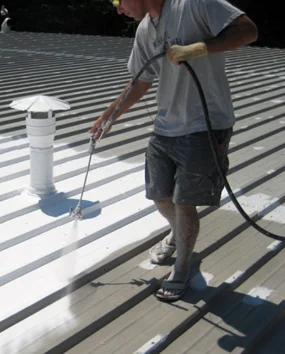
While spray application allows for the rapid covering of large areas, it requires highly skilled operators in order to control the application thickness. For work in small enclosed spaces however, the use of rollers or brushes is favored due to the greater degree of control they offer and the resulting reduction in labor required.
Curing Time and Environmental Conditions
The temperature and humidity can affect the curing speed. In cold weather the curing of the polymers will be slow. In hot weather the drying of the coating can be to fast and uneven. A moderate weather is best for the coating contractors to apply the coating and to allow it to form a complete film.
What Are Common Issues During Waterproofing Projects?
Even the highest quality of material can fail if applied incorrectly or under the wrong conditions. By identifying any potential problems before they occur, you can avoid the added expense of rework.
Inadequate Film Thickness
Thin coatings of paint, can have pinholes or even cracks in them. These give water a means of getting through the surface. In order to prevent this, wet film gauges can be used. They assist in achieving paint of constant thickness on large surfaces.
Poor Joint Treatment
Joints between slabs or wall sections should be reinforced by mesh fabrics or by sealant bands before coating work is started. Without such reinforcement leakages through the construction joints may occur.
Improper Compatibility Between Layers
Incompatible materials can be applied on top of other systems and cause delamination or softening of underlying layers. Please refer to the corresponding manufacturer’s data sheet for multiple products to be used in one system.
How Does Cost Relate to Long-Term Performance?
Even though price is an important factor for procurement decisions, using lifecycle cost analysis will lead to a more proper assessment of value for money.
Initial Material Cost vs Maintenance Expense
Low-cost bituminous coatings may offer savings at the start but require frequent maintenance due to degradation from UV exposure. In contrast, polyurethane coatings have higher initial cost but long service intervals with minimal maintenance.
Labor Intensity Impact on Budget
Manual application of the paint adds extra labor to applying paint using a mechanized spraying method. While on large commercial jobs the efficiency of using the correct piece of equipment to complete the job can save in material costs by not needing to use as many men to apply the paint, the labor is greatly increased on smaller residential jobs.
Warranty Terms from Manufacturers
Warranty periods of 5 to 20 years, depending on the product type are offered by reputable suppliers. Surface preparation prior to installation must be properly documented to avoid any warranty loss when an audit is required.
What Are Current Trends in Waterproof Coating Technology?
The industry is continually evolving, particularly with regards to the drive towards sustainable products along with performance improvements brought about by environmental legislation and client requirements.
Eco-Friendly Formulations
Waterborne polyurethane dispersions are very durable and have low VOC emission which is very desirable as they meet the green specifications of most construction companies worldwide who adopt the green building standards as required for LEED certification.
Nanotechnology Enhancements
Nanoparticle additives improve abrasion resistance and hydrophobicity at micro-levels, extending service life even under harsh climatic cycles like freeze-thaw exposure common in northern regions.
Smart Monitoring Systems Integration
Early detection of moisture penetration into a building through embedded sensors into the membrane layer of a building envelope; These wireless sensors issue an early alert and are of growing interest to the developers of large infrastructure assets, managed remotely.
FAQ
Q1: What is the most durable waterproof coating for roofs? A: Polyurethane-based liquid membranes are typically the most durable roof waterproof coating as they are elastic and stable in the UV.
Q2: Are cementitious coatings suitable for outdoor use? A: Yes, they can be used outdoors, but in order to prevent cracking due to lack of flexibility in temperature changes they must be covered with protective topcoats.
Q3: How thick should be a waterproof coating layer? A: Most of the manufacturers are recommending total dry film thickness of 1–2 mm depending upon system type. One should follow the technical datasheets provided by the manufacturers for each batch of product.
Q4. Is primer always necessary before applying waterproof coating? A. Primers enhance adhesion. Especially for smooth or porous surfaces, primer is necessary to guarantee a secure adhesion of the waterproof coating. In case of absence of primer, the waterproof coating could start peeling as soon as the first curing cycles under load stress begin.
Q5. How long does it take for waterproof coating to dry / cure completely? A. The cure time for a waterproof coating is anywhere from 24 hours to several days, depending on temperature and humidity. It is recommended to allow coating to dry naturally and not to use methods to dry coating faster as these can destroy the membrane cohesion.