How to Choose Concrete Waterproofing Solutions
Choosing the appropriate waterproofing system for concrete structures is critical to ensure the durability of such structures exposed to moisture. An effective waterproofing system must provide a durable long-term water barrier to prevent water penetration and protect the reinforcement from corrosion. An appropriate waterproofing system must be selected based on the intended use of a structure, its exposure conditions and design service life. This article sets out to discuss how to evaluate, compare and apply different systems in order to achieve optimal results.
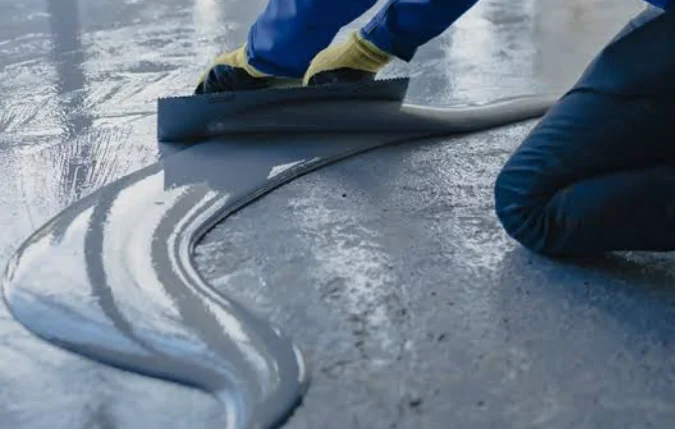
Why Is Concrete Waterproofing Essential?
Concrete is a porous material and as such, water will penetrate through it by capillary action. Water penetrating through the surface of the concrete can cause cracking, spalling and steel corrosion. In regions where water is subject to freezing and thawing or where humidity is high, the aforementioned damage can be exacerbated. Waterproofing is not something that you can decide to do or not to do. You must protect this area before the cost of repairs becomes too much.
Structural Durability and Longevity
Waterproofing a structure extends the life of its elements. Free water in concrete suffers expansion and contraction due to temperature change, leading to progressive breakdown of all joints and surface deterioration. By creating a solid continuous barrier, effective waterproofing, whether in the form of a high quality membrane or a series of active crystals, dramatically reduces the permeability of a structure, extending the life of its elements.
Protection Against Corrosion
Steel embedded in concrete starts to corrosion as soon as it comes in contact with oxygen and moisture. The expansion of the corrosion products builds up pressure inside the surrounding concrete until cracks develop. In order to design long lasting structures and sustainable infrastructure corrosion should be prevented as far as possible. The waterproofing of concrete by adequate coating systems as well as by chemical admixtures already at the time of construction of the structure will turn the corrosion into a less aggressive process.
Prevention of Mold and Efflorescence
Moisture intrusion also triggers biological growth such as mold or mildew on interior surfaces. In addition, soluble salts migrate through damp concrete and crystallize as efflorescence on walls or floors. Effective waterproofing prevents these aesthetic and health-related issues by keeping internal humidity levels stable.
What Are the Main Types of Concrete Waterproofing Systems?
When choosing between various waterproofing systems, they should be assessed in their technical merits compared to the specific application of a construction site and the structural design. Every waterproofing system is suited for specific fields of application.
Integral Waterproofing Admixtures
Specialized waterproofing chemicals are developed into ready mixed concrete by adding them as an integral admixture. These admixtures chemically react with the cement in the concrete as the products of hydration fill out the micro-pores and capillaries of the matrix from within. The use of integral waterproofing systems in building construction provides a long lasting solution to waterproofing where access to treated concrete after it has been cast is not feasible. It is particularly suited for applications such as foundations, tunnel construction and water tanks.
Membrane-Based Systems
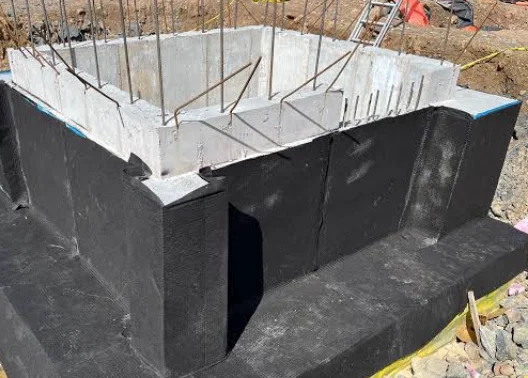
There are also a number of membrane solutions available for use either as a liquid coating or as a sheeted membrane creating a complete envelope around the structure. Below grade structures are typically protected with a bituminous membrane. Weather exposed roof structures, decks and walkways are typically coated with a membrane, such as polyurethane or acrylic coating. These solutions are highly flexible and resist UV degradation.
Crystalline Waterproofing Technology
Our crystalline based concrete sealer products fill up the pores of concrete to create a permanent barrier. The sealer deeply penetrates into the concrete to form an insoluble matrix of crystals. Then, automatically, the sealer begins to self heal any cracks in the concrete that allow water to penetrate as soon as water flows into a crack up to 0.4 mm in width. This type of long lasting protection is ideal for basement walls and other structures with retaining walls.
How Should Environmental Conditions Influence Selection?
The environmental exposure to which a building is exposed has a significant influence on the behavior of a waterproofing system.
High-Humidity or Coastal Areas
In environments where structures are exposed to a coastal environment with a high risk of chloride attack the potential for corrosion is aggressive. Unlike surface coatings which will breakdown in ‘salty’ environments, materials that contain crystals are permanently incorporated into the concrete.
Cold Climates with Freeze-Thaw Cycles
Severe expansion stress occurs in the concrete pore spaces which are filled with water and are subjected to repeated freezing and thawing. In contrast, elastomeric membranes are very flexible and do not crack, thus ensuring full watertightness also in cases of great variation in thermal stress typical of cold regions.
Industrial or Chemical Environments
A chemi-calc resistant waterproofing is needed for facilities that store or treat chemicals or wastewater. A chemical resistant epoxy coating is ideal to coat storage tanks, chemical containment ponds or wastewater treatment plants. Standard waterproofing membranes would deteriorate to quickly in such harsh environments.
What Are Key Factors When Evaluating Product Performance?
While the environmental performance of products can play a major role in the purchase decision, ultimately one has to base the decision on quantifiable criteria and tests which are conducted in compliance with valid test standards, e.g. for concrete, ASTM C1202 for the migration of chloride ions or EN 12390 for the compressive strength.
Permeability Reduction Ratio
Reducing the permeability of concrete prevents water from penetrating into a structure. An admixture which can decrease the permeability of the concrete to more than 80% than control mixes of comparable composition would be effective to seal a structure from inside and would be recommended for critical application such as infrastructure development.
Crack Bridging Capability
High elongation membranes (> 300%) enable flexible membranes that do not crack and ensure long term durability of the bonding system in dynamic structures such as bridges or slabs on several levels.
Compatibility with Structural Movement Joints
The expansion joints are incorporated into the waterproofing system without any gaps, by means of the corresponding sealants or joint tapes, in order to prevent leaks through the transitions from different materials.
How Does Application Method Affect Long-Term Performance?
Even very expensive materials fail quickly when not installed properly. Whether a system lasts decades depends almost entirely on how it was installed.
Surface Preparation Quality
All concrete painting areas must be cleaned, allowed to dry and all laitance removed prior to application of any coating. If surface is not properly cleaned and prepared coating will fail due to lack of adhesion or form blisters as moisture in the concrete is trapped under the paint film.
Thickness Control During Application
To achieve the necessary resistance to permeability, a constant liquid membrane thickness of 1–2 mm is to be kept. An inhomogeneous layer would have weaknesses, e.g. small holes, which can get damaged during backfilling.
Curing Time and Environmental Control
The temperature and humidity during the curing period of a liquid-applied system affects the formed film greatly. To achieve a continuous film and to prevent early exposure it is necessary to follow the recommended curing period of the liquid-applied system manufacturer.
How Do Maintenance Practices Extend Service Life?
During the operational phase of a building maintenance is used to ensure that installed systems are maintained at their original performance.
Regular Inspection Schedules
Even slight wear and tear in the form of blisters or partial releases on the tread or in the joint areas can be detected during the annual check-up. By treating such minuscule localized faults in good time, before they have had time to develop on the rest of the surface, they can be prevented from running amok.
Cleaning Procedures for Exposed Surfaces
Dirt on roof surfaces holds water against coated surfaces, decreasing reflectivity. Regular cleaning to remove dirt ensures that roof membranes appear as and perform as they were designed to.
Repair Techniques for Minor Damage
Even using suitable repair materials, the patches manage to fully restore the level of protection granted by the original element. Patch repair is a common strategy for maintenance in tunnel structures because it helps to save time, and that in itself is a cost for the work as a whole.
FAQ
Q1. Most durable concrete waterproofing? A. Crystalline admixtures – they last longer as they are actually a part of the hardened concrete matrix, rather than a coating or membrane on the surface which can suffer damage as well as wearing out over time.
Q2: Can old concrete be waterproofed? A: Yes. Surface-applied crystalline coatings can penetrate an existing substrate to seal micro-cracks from the inside out. Even older structures can be successfully treated by first thoroughly cleaning the surface prior to application.
Q3. Is membrane waterproofing suitable for use in the basement? A. Yes – Sheet membranes are suitable for use below grade provided that used in conjunction with an appropriate drainage system so that no opportunity exists for water to cause damage by placing hydrostatic pressure on the walls.
Q4: How often should a waterproofed roof be inspected? A: An annual check-up before the start of the rainy season can identify first stages of deterioration such as peeling of the roof’s edges in time for required actions.
Q5: Do all waterproofing products resist chemical exposure? A: No, only specific formulations such as epoxy-based coatings are designed for harsh industrial environments where chemical contact occurs regularly.