Basement Waterproofing Methods Explained
Waterproofing of basements is essential for the stability of a building. It can help to prevent water entry, growth of mold and fungi and also deterioration of a foundation. The most efficient method of waterproofing a building is largely dependent upon the type of soil found, the type of the building’s foundation and the flow of groundwater. Mostly a combination of internal and external waterproofing systems is implemented by professionals in order to guarantee long lasting protection of a building. Here are some of the methods used for waterproofing of basements and the relevant technical aspects.
What Are the Main Types of Basement Waterproofing Methods?
Waterproofing methods are chosen depending on the type of problem i.e. is it pressure, capillary rise or surface run-off and then there are waterproofing methods to deal with each of these before the water reaches the surface of the concrete or masonry and penetrates it.
Interior Sealants and Coatings
Interior sealants are usually applied to basement walls and floors to stop small amounts of moisture from entering. These coatings are cement-based or epoxy-based and work as a barrier to stop moisture in the air from passing through and entering the basement. Seals are not a good solution for active leaks or high water pressure from groundwater. In most cases they are applied after the necessary repairs have been done to the structural cracks in the basement.
Exterior Membrane Systems
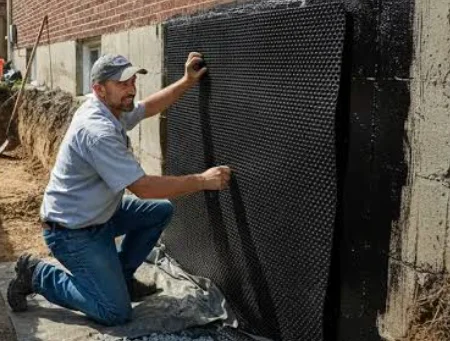
The most complete defense for a basement is an exterior waterproofing membrane. It keeps water from the surrounding soil from penetrating the masonry. Such membranes are elastomeric coatings applied to a primed surface. They are frequently applied over a external drainage board to guide water down to footing drains. These membranes require a complete perimeter excavation around the outside of the foundation.
Drainage and Sump Pump Solutions
The typical method of managing water under and around the perimeter of a slab is to implement a drainage system with sump pumps. The perforated drain tiles gather the groundwater and move it to a sump, and then it is pumped out from the house. Many sump systems are equipped with dual pumps and also have a battery back-up for times of power failure, especially in areas with high water tables.
How Does Soil Composition Affect Waterproofing Performance?
The properties of the soil in contact with the foundation will affect both the level of the hydrostatic pressure and the water retention in the soil. In soils with a high proportion of clay, water is held for longer, whereas dry sand for example allows fast drainage but can also cause erosion around footings.
Clay-Rich Soil Challenges
Clay expands when wet and contracts as it dries, exerting lateral pressure on basement walls. This cyclical movement can lead to cracking in concrete or block foundations. In such cases, exterior membranes must remain flexible enough to accommodate minor shifts without tearing.
Sandy Soil Drainage Considerations
Soil with a high sand content allows water to penetrate the surface quickly. However, it can also be unstable and must be properly compacted during backfill. Geotextile filters around footing drains prevent the sand from entering pipes, ensuring that a well functioning drainage system is in place for the long term.
Mixed Soil Conditions
A number of residential drainage sites are of stratified form with varying permeability through the layers. A hybrid system of an external barrier combined with an internal drain is recommended for such unpredictable flow situations.
Why Is Foundation Crack Repair Critical Before Waterproofing?
Cracks in the structure through which treatments have been applied as waterproofing, are just as bad when left unrepaired. Moisture will find its way into even the tiniest crack by capillary action, effectively negating any external applied membrane or coating.
Epoxy Injection for Structural Cracks
Epoxy injection is a repair method that returns poured concrete foundations to their original compressive strength and water tightness. Low-viscosity resin is injected under pressure until all openings are filled. The epoxy then cures and bonds the repaired areas together.
Polyurethane Foam Injection for Active Leaks
For dynamic cracks subject to slight movement or active seepage, after being expanded, the polyurethane foam remains elastic. In the cracks it fills, it reacts with moisture to form a closed-cell mass that does not permit leakage even when subjected to minor movements.
Mortar Patching for Masonry Walls
When treating older stone or brick basements, often the deteriorating of the mortar joints has to be repointed before any coating system can be applied. A lime-based mortar provides the breathability required for older buildings, yet still gives a good adhesive bond to any overlying waterproof coating.
What Role Do Drainage Systems Play in Long-Term Protection?
Even the most robust of membranes can fail if pressure from hydrostatic water build-up is not alleviated behind the foundation walls. Proper and functioning drainage is critical to extend the life of the waterproofing system.
Footing Drains Along Foundation Perimeter
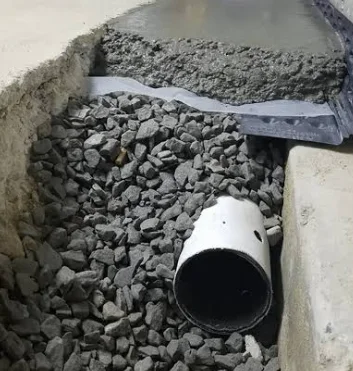
Footing drains consist of perforated pipes laid beside the footing base, surrounded by gravel and filter fabric. Their purpose is to intercept groundwater before it rises against basement walls, channeling it toward safe discharge points like daylight outlets or sump pits.
Interior French Drains Beneath Basement Floors
Interior French drains work much the same way as exterior French drains but instead of being installed in the ground outside of the basement wall they are installed along the inside perimeter of the basement beneath the floor slab. They are designed to collect water leaking into the basement through wall-floor joints and then pump it out with sump pumps.
Surface Grading and Gutter Extensions
By establishing proper grades rainwater will drain away from the foundation of a house rather than towards it. Extension of downspouts of several feet from walls of houses will also assist in avoiding localized puddles of water which could be expected to rapidly overflow the normal subsurface drainage system during periods of heavy rain.
How Do Modern Technologies Improve Basement Waterproofing Efficiency?
The field of materials science has made large strides in the development of robust membranes as well as more sophisticated monitoring solutions that can quickly detect a leak before it causes too much damage.
Liquid-Applied Membranes with Polymer Additives
Modern liquid-applied membranes are made up of polymer-modified bitumen or acrylic resins that are extremely flexible and adhere well to surfaces even which are very irregular. After application, the membrane forms a continuous film without any seams, which are typically points where leaks start.
Smart Moisture Sensors and Alarms
The wireless humidity sensors now placed in the basement cavities will alert the homeowner when the relative humidity exceeds the preset value and indicate the possibility of water leakage before signs of moisture appear on the walls and floors.
Crystalline Admixtures in Concrete Mixes
The crystalline additives mixed into freshly mixed concrete react with the present moisture to form a binding of insensitive crystals in the concrete pores and in the opened up micro cracks. These passages, that can be penetrable by water under pressure, are thus definitely closed.
What Are Common Mistakes That Compromise Waterproofing Results?
The highest quality materials can not overcome poor installation practices. Common mistakes made during construction or even retrofits of buildings can lead to problems that continue to arise even after considerable investment has been made to remedy the issue.
Inadequate Surface Preparation
Remember dirty or damp surfaces cannot be coated as adhesion fails quickly leading to lifting or blistering in a matter of months. Always clean surfaces thoroughly before applying a treatment and allow to dry before coating.
Poorly Designed Drainage Outlets
The outlet of drain pipes must have a minimum slope to allow water to flow to the sewer. In time, the sediment in the water can plug the outlet of the drain. As a result, the water that the drain was collecting will back up against the foundation of a house even though all the drain pipes and their connections are okay.
Ignoring Minor Seepage Signs
Even small stains or musty smells can be the first signs of defects which may develop into serious failures before visible flooding occurs. After heavy rainfalls it is advisable to make routine checks for early warning signs that require prompt maintenance actions.
FAQ
Q1. How long does exterior basement waterproofing last? A. High-quality exterior waterproofing membrane systems last from 25 to 40 years, depending on the quality of the membrane and the workmanship of installation, as well as the quality of the footings and drainage system.
Q2: Can interior sealants stop major leaks? A: No, they are only good for light moisture and will need to be supported by a more serious repair of the crack and exterior protective measures.
Q3. Sump pump maintenance required!? Yes it is! Every now and then check that your sump pump’s float switch is working ok and also every now and then clear out the gunk from the basin so it doesn’t get clogged when you need it most!
Q4. Should old homes be dug up for new damp-proofing? A. No, unless all of the original damp-proof coatings have totally failed. It is usually possible to carry out interior retrofits depending on the remainder of the old structure and soil type.
Q5. When in the year would be best time to start doing waterproofing work. A. Late spring till early fall are best times of the year to do waterproofing work. This is because the soil is dry enough so it won’t collapse and thus is safe enough to start doing excavation for waterproofing. The material also sticks very well to surfaces during these times unlike during cold wet months.