Basement concrete floor cracks and when they need repair
What basement concrete floor cracks usually mean
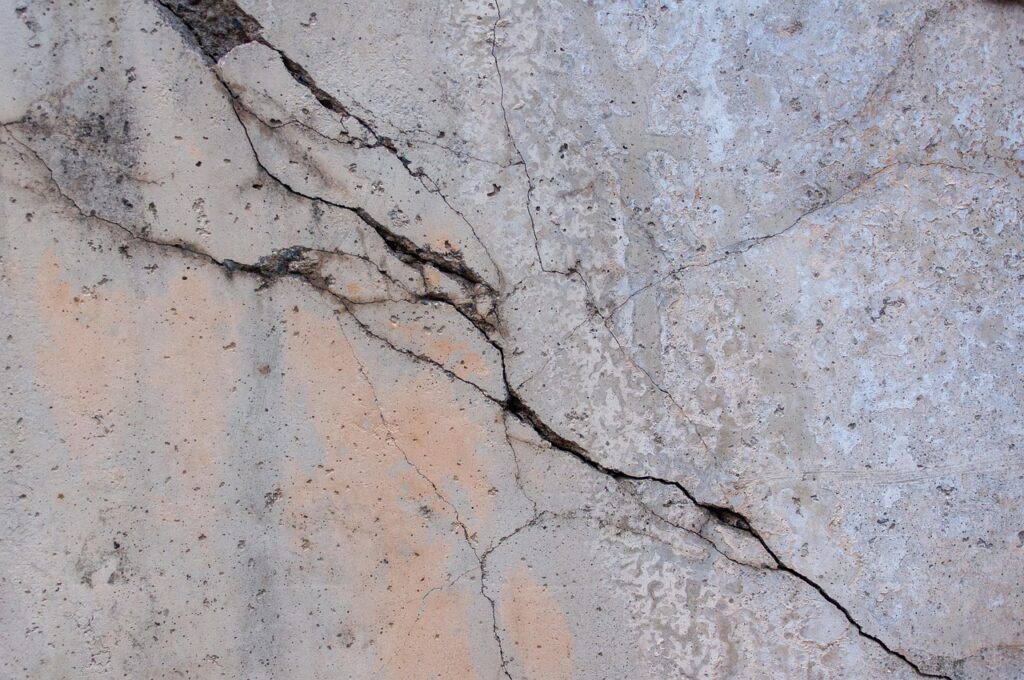
Basement concrete floor cracks do not automatically point to a structural emergency. Many basement floors are slab-on-ground slabs, and concrete can crack as it shrinks, dries, curls, or is restrained by foundation walls, columns, plumbing penetrations, and joints. The key question is not only whether a crack is present. It is whether the crack is moving, leaking, displaced, connected to soil or drainage problems, or likely to affect a finished floor system.
A narrow, dry, stable hairline crack may only need monitoring or sealing before the basement is finished. A crack with vertical offset, visible widening, water seepage, repeated efflorescence, musty odor, or nearby wall movement needs closer investigation. A useful repair plan starts with diagnosis, because filling the visible line will not, by itself, correct settlement, hydrostatic pressure, poor drainage, or radon entry.
Why basement slabs crack
Drying shrinkage and restraint
Concrete has high compressive strength, but its tensile capacity is relatively low. As a slab hardens and loses moisture, it tends to shrink. If the slab is restrained by friction with the subbase, foundation walls, thickened areas, pipe penetrations, or embedded reinforcement, tensile stress can build until the slab cracks. This is why a basement floor can develop a long random crack even when the concrete was mixed, placed, and finished competently.
American Concrete Institute guidance on floor and slab construction treats some cracking and curling as expected slab behavior, not as proof of defective work by itself. ACI guidance also explains that joints are used in slab-on-ground construction to reduce the frequency and width of random cracking caused by volume changes. Control joints do not make concrete immune to cracking; they help direct cracking to planned, less disruptive locations.
Joint layout, curing, and slab thickness
Basement floors often have fewer visible control joints than garage floors or commercial slabs because homeowners prefer an uninterrupted surface. That can make the floor look cleaner at first, but it gives shrinkage stresses fewer planned release points. Random cracking is more likely where slab panels are large, re-entrant corners exist, penetrations interrupt the slab, or saw cuts are too late, too shallow, or absent.
Curing conditions also matter. Rapid surface drying can increase early-age cracking risk, especially when warm air, wind, low humidity, or an absorbent subbase pulls moisture from the slab. A well-prepared subbase, suitable concrete mixture, timely curing, and appropriate joints reduce risk, but they cannot eliminate every crack risk in a slab-on-ground floor.
Soil movement and water pressure
Basements sit below grade, so the slab is influenced by soil and water conditions. Poor exterior grading, short downspouts, clogged footing drains, high groundwater, expansive soils, frost movement in cold regions, or settlement of fill can all change the support conditions below the floor. When support becomes uneven, cracks may open, widen, or develop vertical displacement.
The International Residential Code includes foundation provisions for drainage, dampproofing, and waterproofing because groundwater and surface water around below-grade spaces are predictable building risks. EPA moisture-control guidance also emphasizes fixing moisture at the source and directing water away from foundations. For a basement slab, crack repair should be considered together with roof drainage, grading, sump performance, perimeter drainage, and indoor humidity.
A practical field check before choosing a repair
Before selecting a filler, sealant, coating, or injection method, document the crack. This simple check creates a baseline and helps separate cosmetic shrinkage cracking from symptoms of a larger building problem.
- Map the pattern. Note whether the crack is random, straight along a joint, branching, near a column, around a drain, parallel to a wall, or connected to a wall crack.
- Measure width and length. Use a crack gauge, ruler, or marked photograph. Recheck after heavy rain, snowmelt, or seasonal humidity changes.
- Check for vertical offset. Run a straightedge across the crack. A lip or trip edge suggests differential movement and should not be treated as a simple cosmetic line.
- Look for moisture clues. Darkened concrete, damp carpet, efflorescence, rust staining, peeling coating, or a musty smell can indicate repeated moisture movement.
- Identify active leakage. A crack that leaks during storms usually needs water management, not just surface patching.
- Consider air quality. The U.S. EPA identifies foundation cracks and openings as possible radon entry routes, and its radon guidance does not treat sealing alone as a complete radon mitigation strategy.
- Check the planned use. A storage basement, finished living area, gym, workshop, or tiled floor each has different tolerance for movement and moisture.
Signs that a crack needs professional evaluation
Some cracks can be monitored or sealed by a competent owner or contractor. Others should be reviewed by a structural engineer, foundation specialist, waterproofing professional, or radon mitigation contractor, depending on the symptoms. The table below is a practical triage guide, not a universal code rule.
| Observed condition | What it may indicate | Recommended response |
|---|---|---|
| Hairline crack, dry, no offset, unchanged over time | Common shrinkage or minor restraint cracking | Monitor, clean, and seal if dust, vapor, insects, or flooring concerns exist |
| Crack follows a saw cut or tooled joint | Joint performing as intended | Seal the joint if moisture, radon reduction work, or finished flooring requires it |
| Vertical displacement across the crack | Possible differential settlement, heave, or slab support issue | Get a professional assessment before covering or grinding the floor |
| Crack widens seasonally or after storms | Active soil, moisture, or thermal movement | Track changes and address drainage or support conditions before cosmetic repair |
| Water enters through the crack | Hydrostatic pressure, poor drainage, high groundwater, or a sump issue | Investigate exterior water management, drainage, sump capacity, and crack sealing |
| Crack aligns with wall cracking or door movement | Possible foundation or framing movement | Consult a qualified structural or foundation professional |
| Finished basement with elevated radon test | Soil gas entry through cracks, joints, sumps, or penetrations may be contributing | Follow EPA testing guidance and use a qualified radon mitigation approach if needed |
Repair options and where each fits
The repair method should match the crack behavior. A rigid patch on an active crack often fails. A flexible sealant can reduce vapor, dust, and minor moisture movement, but it does not restore structural load transfer. Injection may be suitable in some cracks, but the choice depends on whether the goal is waterproofing, structural bonding, or both.
| Repair option | Suitable use | Important limitation |
|---|---|---|
| Cleaning and monitoring | Very narrow, dry, stable cracks where no finish floor is planned immediately | Does not seal vapor, radon pathways, or moisture |
| Route and seal with flexible sealant | Nonstructural cracks or joints where slight movement is expected | Improves sealing at the surface but does not bond the slab together |
| Polymer-modified repair mortar or patch | Shallow surface defects, spalls, or prepared cracks that are stable | May debond or re-crack if the slab continues moving |
| Polyurethane crack injection | Leaking cracks where flexible water sealing is the main goal | Not primarily a structural strengthening method |
| Epoxy injection | Dormant structural cracks where bonding and load transfer are needed | Unsuitable for cracks that are still moving unless a design professional approves the approach |
| Grinding or slab leveling | Trip edges, localized unevenness, or flooring preparation after movement is understood | Can hide symptoms without correcting settlement or heave |
| Overlay or floor covering | Appearance improvement after cracks are stable and moisture is controlled | May fail if vapor emissions, leakage, or movement remain unresolved |
ACI and concrete repair industry guidance generally starts with evaluation before repair. That sequence is especially important in basements because the visible crack may be only the easiest symptom to see. If the crack leaks, the repair plan should also ask why water is reaching the slab and whether pressure could reappear at the next weakest joint or penetration after the crack is sealed.
How to reduce future cracking and moisture problems
For existing basements, prevention starts outside. Maintain gutters, extend downspouts away from the foundation, keep soil sloped away from the house, and correct surface ponding. Inside, keep sump pits, discharge lines, floor drains, and dehumidification systems functional. EPA homeowner moisture guidance repeatedly points to controlling water at its source, not just drying the room after damage occurs. See also: Membranes.
For new slabs or major basement renovations, design and construction choices matter. A uniform compacted subbase, appropriate vapor retarder where required, suitable slab thickness, well-planned contraction joints, isolation around columns and penetrations, and proper curing all reduce random cracking risk. Where a basement will receive resilient flooring, tile, laminate, wood, carpet, or coatings, moisture testing and manufacturer requirements should be addressed before installation.
Radon needs separate attention. The EPA recommends action to reduce indoor radon when test results are 4 pCi/L or higher, and it also notes that lower levels can still carry risk. Sealing cracks and below-grade openings can be part of a radon-resistant approach, but EPA guidance does not recommend sealing alone as the only radon control method. If a basement is finished or frequently occupied, radon testing on the lowest lived-in level is a practical step.
For more building application topics related to concrete, waterproofing, and construction materials, visit the Applications section.
Frequently asked questions
Are hairline cracks in a basement concrete floor normal?
Hairline cracks are common in basement slabs, especially when they are dry, level, and not widening. They often result from shrinkage, restraint, or normal slab movement. The crack should still be documented before the basement is finished, because flooring can make later inspection harder.
Can I install flooring over basement concrete floor cracks?
Sometimes, but only after checking movement and moisture. A stable dry crack may be compatible with certain floor systems after proper preparation. A leaking, widening, or displaced crack should be repaired and monitored before installing tile, wood, laminate, carpet, or coatings. Always follow the flooring manufacturer’s moisture and substrate requirements.
Will concrete sealer stop water from coming through a basement crack?
A surface sealer may reduce minor vapor or dampness, but it is not a reliable fix for active water pressure. If water appears during storms or snowmelt, the source may involve exterior grading, roof drainage, groundwater, sump performance, or footing drains. The water problem should be addressed before relying on a surface finish.
Do basement slab cracks mean the foundation is failing?
Not necessarily. Many basement floor cracks are limited to the slab and do not indicate foundation failure. Concern increases when floor cracks have vertical displacement, align with wall cracks, grow over time, appear with sticking doors or windows, or coincide with settlement signs. Those conditions justify professional evaluation.
Should I test for radon if I see basement floor cracks?
Testing is sensible, especially if the basement is used as living space or will be finished. Foundation cracks, slab joints, sump openings, and penetrations can be soil gas entry routes. A radon test provides useful information that visual inspection cannot supply.
The main takeaway
The best repair for basement concrete floor cracks is the one that matches the cause. Dry, stable shrinkage cracks may only need monitoring or sealing. Leaking cracks require moisture diagnosis. Moving or displaced cracks need evaluation before cosmetic repair. If the basement will become finished space, the decision should also account for flooring performance, indoor moisture, and radon risk, not just the appearance of the concrete surface.