Basement wall crack repair methods for leaks, movement, and structural warning signs
Start with the cause, not the filler
Basement wall crack repair should start with the crack pattern, wall material, and moisture conditions around the foundation. A narrow vertical crack in poured concrete that leaks after rain is handled differently from a long horizontal crack in a block wall, a stair-step crack through masonry joints, or a wall that is visibly bowing inward.
The best repair is not always the strongest product on the shelf. It is the method that matches the cause. Epoxy injection can bond stable concrete cracks. Polyurethane grout can seal many wet cracks and cracks with minor movement. Structural reinforcement may be needed when the wall is being displaced by soil or water pressure.
For construction readers and homeowners comparing below-grade solutions, sealing the visible line is only one part of the work. Drainage, grading, sump performance, and the wall’s movement history often decide whether the repair lasts. More below-grade construction topics are grouped in our Applications section.
What different basement wall cracks usually indicate
Crack pattern matters because basement walls resist soil loads, water pressure, seasonal moisture changes, and building loads. The same crack width can mean different things in poured concrete, concrete masonry block, stone, brick, or an older mixed foundation.
Vertical cracks in poured concrete
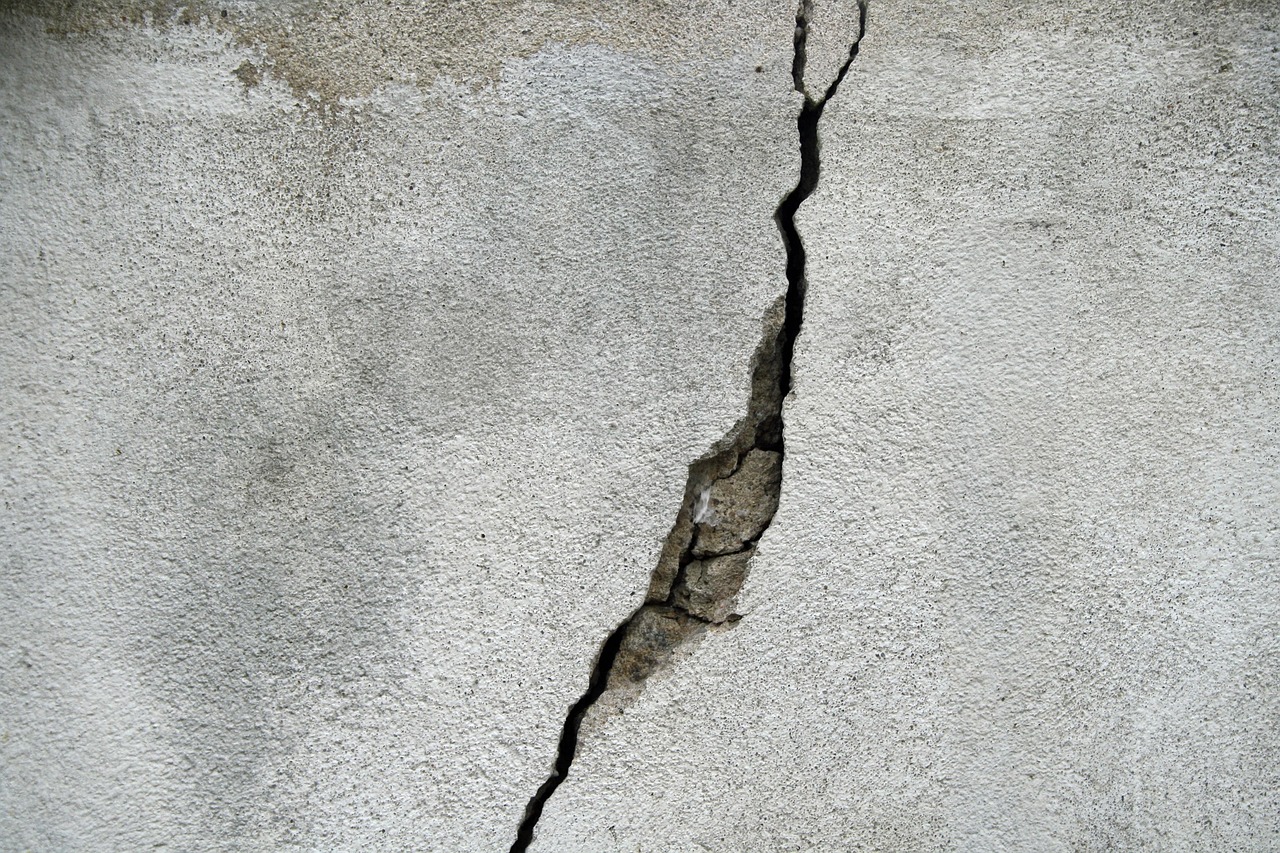
Vertical cracks are common in poured concrete basement walls, especially near window openings, corners, form tie locations, or changes in wall height. Industry repair guidance often links these cracks to concrete shrinkage and restraint during curing. If the crack is relatively straight, the wall remains plumb, and there is no offset between the two sides, the repair focus is usually water control and crack sealing rather than wall reinforcement.
Horizontal cracks and inward bowing
A horizontal crack requires more caution. In a basement wall, horizontal cracking can be associated with lateral soil pressure, frost pressure, saturated backfill, or inadequate wall support. North Dakota State University Extension notes that buckled walls may show horizontal cracking and areas that have moved out of vertical alignment. If the wall is noticeably bowed, leaning, or displaced, crack injection alone is not a structural solution.
Stair-step cracks in block or brick
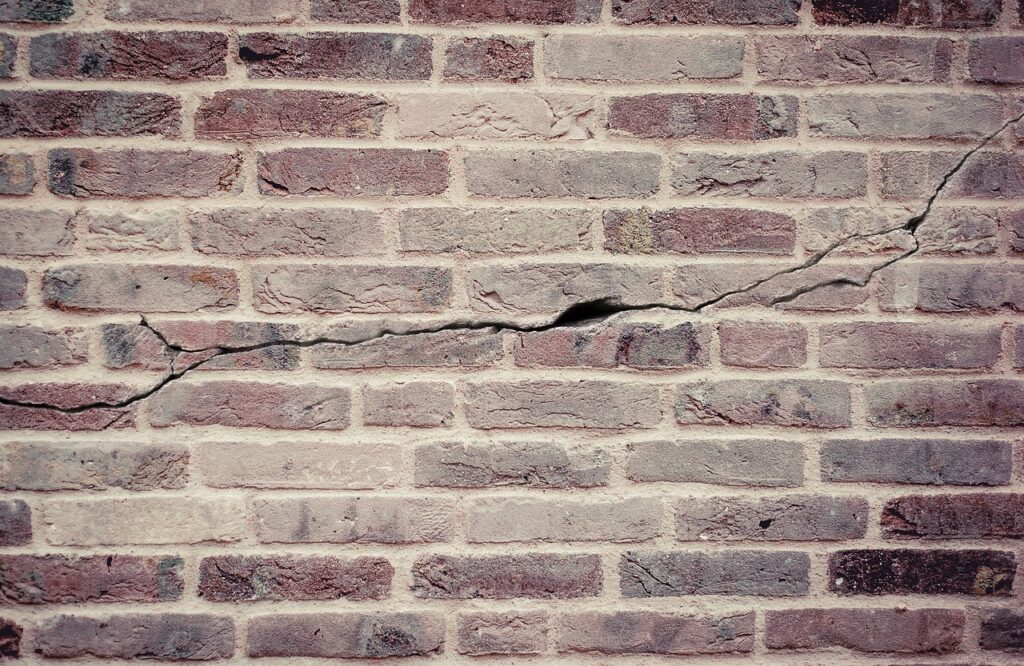
Stair-step cracks often follow mortar joints in concrete block or brick. They may indicate settlement, lateral movement, freeze-thaw stress, or concentrated loads around an opening. The crack path should be compared with exterior grade changes, downspout discharge, tree roots, nearby excavation, and any previous repair work.
Diagonal cracks and cracks with offset
Diagonal cracks can be linked with differential settlement or uneven soil support, particularly when the crack is wider at one end or when the wall surfaces no longer align. If the crack edges are offset, if the crack continues into the slab, or if nearby doors and windows have begun sticking, the condition should be evaluated before cosmetic repair is considered.
When to call a structural professional before repair
Some basement wall cracks are suitable for limited repair. Others are warning signs. A licensed structural engineer or qualified foundation professional should be involved when the crack is accompanied by wall movement, repeated widening, significant leakage, or signs that the footing or wall is shifting.
- Long horizontal cracks, especially in block walls or walls retaining high exterior soil.
- Visible bowing, leaning, bulging, or rotation of the wall.
- Crack edges that are offset, crushed, or widening over time.
- Stair-step cracking that continues through multiple courses of masonry.
- Water entry that returns after injection, patching, or interior sealant.
- Cracks associated with flooded basements, heaved slabs, or undermined footings.
- New cracking after nearby excavation, drainage changes, or major storms.
After flooding, safety comes first. Extension and emergency guidance commonly warns against pumping a flooded basement too quickly because saturated soil outside the foundation may continue pressing against the walls. A rapid drop in the interior water level can increase the pressure imbalance on walls and floors. Electrical, gas, and structural hazards should be checked before cleanup or repair begins.
Choosing between epoxy, polyurethane, surface repair, and structural reinforcement
The repair material should match the job the repair must perform. A product that works well for water sealing may not restore structural continuity. A rigid structural adhesive may not be suitable for a damp crack that opens and closes seasonally.
| Repair method | Typical use | Main advantage | Important limitation |
|---|---|---|---|
| Epoxy injection | Stable cracks in poured concrete where bonding is needed | Creates a rigid bond across the crack | Less flexible; many epoxies require dry or properly prepared concrete |
| Polyurethane grout injection | Leaking cracks, damp cracks, and cracks with slight seasonal movement | Expands and seals water paths; generally more flexible than epoxy | Not a structural wall reinforcement |
| Hydraulic cement or surface patching | Small nonstructural openings, utility penetrations, localized seepage control | Fast and accessible from the interior | May fail if water pressure remains behind the wall |
| Exterior waterproofing and drainage repair | Recurring leakage caused by exterior water pressure | Addresses water before it reaches the wall | More invasive; may require excavation and drainage design |
| Carbon fiber, steel bracing, anchors, pilasters, or rebuilding | Bowed, displaced, or structurally weakened walls | Designed to resist wall movement | Requires engineering judgment and may not solve water entry by itself |
Epoxy injection
Epoxy injection is commonly used when the goal is to bond a stable concrete crack. Concrete repair guidance from ACI and ICRI sources describes epoxy as a structural repair material, while also noting that it is comparatively rigid. That rigidity is useful when the wall is stable. It can be a drawback if the crack continues to move. If movement continues after a rigid repair, stress may transfer to nearby concrete and another crack can form.
Polyurethane injection
Polyurethane chemical grout is often selected for active leaks because it can bond in damp conditions and expand into irregular voids. It is especially relevant when water appears after heavy rain and the wall shows no evidence of structural displacement. The important distinction is that polyurethane injection seals a water path; it should not be treated as reinforcement for a bowing or settling wall.
Surface sealants and hydraulic cement
Interior surface sealants and hydraulic cement can be useful for small openings, tie holes, or short-term water management, but they have limits. If water pressure builds behind a surface patch, the patch may debond, leak around the edges, or redirect moisture through adjacent concrete or masonry. Surface patching is best understood as a localized repair, not a substitute for drainage correction or structural stabilization.
Structural reinforcement
When a wall is moving inward, the repair scope changes from crack sealing to structural restraint. Carbon-fiber reinforcement, steel beams, wall anchors, pilasters, or partial rebuilding may be considered depending on the wall type, amount of movement, soil conditions, and local code requirements. These systems should be selected through evaluation, not by crack appearance alone.
Moisture control determines whether crack repair lasts
Many basement cracks leak because water collects outside the foundation. The 2024 International Residential Code separates ordinary dampproofing from waterproofing and requires foundation waterproofing where a high water table or severe soil-water conditions are known to exist. In practical terms, a wall crack repair may stop a leak at one point, but it does not remove the pressure source around the wall.
University extension guidance consistently emphasizes drainage basics: keep gutters working, extend downspouts away from the foundation, and maintain positive slope so water drains away from the building. Illinois Extension has described a 5–10% slope away from the foundation as a way to reduce basement water entry risk during heavy rainfall. NDSU Extension also notes that fine-particle soils such as clay can shrink during dry periods and swell when wet, creating changing support and pressure around basement walls. See also: Membranes.
Interior drainage systems can also be part of the solution. Where groundwater remains above the basement floor, NDSU guidance explains that a drainage envelope of drain tile or pipe in granular material can intercept water and direct it to a sump. If that drainage path is missing, clogged, or overwhelmed, water may enter at the wall-floor joint, through floor cracks, or through wall cracks.
Moisture control also affects indoor materials. The U.S. Environmental Protection Agency advises drying wet or damp materials within 24 to 48 hours after a leak or spill when possible to reduce the likelihood of mold growth. For a crack repair project, the plan should include drying, dehumidification, and removal of water-damaged porous materials where needed, not only sealing the crack line.
A practical inspection sequence before specifying repair
A clear inspection sequence helps avoid over-repairing minor cracks and under-repairing structural movement. The following steps are useful for documenting conditions before selecting a method.
- Identify the wall type. Poured concrete, concrete block, brick, stone, and mixed foundations crack and repair differently.
- Map the crack pattern. Record whether the crack is vertical, horizontal, diagonal, stair-step, random, or located at an opening.
- Check for displacement. Use a straightedge, level, or laser reference to look for bowing, offset, or out-of-plumb sections.
- Document moisture timing. Note whether water appears during rain, after snowmelt, during high groundwater, or continuously.
- Inspect exterior drainage. Look at gutters, downspouts, soil settlement, paved surfaces, window wells, and grading near the crack.
- Review previous repairs. Old patches, interior coatings, injection ports, or hidden finished walls may indicate recurring leakage.
- Monitor change. If the condition is not urgent, dated photos or crack monitors can help determine whether the crack is active.
This sequence also helps separate facts from assumptions. For example, a narrow vertical shrinkage crack that leaks only during wind-driven rain may need injection and drainage correction. A similar-width crack with wall offset may need structural evaluation first. The visible width alone does not answer the repair question.
Code and specification issues that should not be overlooked
Basement wall crack repair often happens in existing buildings, but code context still matters. The IRC is a model code and becomes enforceable through state or local adoption, so the applicable edition and amendments vary by jurisdiction. Repairs that affect structural capacity, egress, waterproofing, drainage discharge, or finished basement assemblies may require permits or inspections.
Specifications should define more than the product name. A repair document should state the crack preparation method, injection material, surface sealing approach, curing requirements, moisture conditions, and any limitations. For structural work, it should also identify design assumptions, wall movement measurements, connection details, corrosion protection, and whether exterior water management is included.
Good specifications also avoid promising that one repaired crack will prevent all future basement water entry. If soil moisture, hydrostatic pressure, or grading problems remain, water may find another weak point. Crack repair, waterproofing, and drainage should therefore be considered as related systems rather than isolated tasks.
Frequently asked questions
Can I repair a basement wall crack from the inside?
Yes. Many poured concrete cracks can be injected from the interior, especially when the goal is to seal a leak. Interior injection is less disruptive than excavation, but it does not correct exterior grading, failed footing drains, or soil pressure. If the wall is moving, interior crack sealing alone is not enough.
Is epoxy or polyurethane better for basement wall crack repair?
Neither is always better. Epoxy is generally selected for stable cracks where bonding is the priority. Polyurethane grout is often selected for leaking or damp cracks because it is more flexible and can seal irregular water paths. Structural movement should be evaluated separately before either material is specified.
Are horizontal basement wall cracks dangerous?
They can be. A horizontal crack may indicate lateral pressure or wall bowing, particularly in block walls or walls with wet exterior soil. If the wall is out of plumb, displaced, or continuing to move, a structural evaluation is recommended before patching or injection.
Will hydraulic cement stop a basement wall leak?
Hydraulic cement can stop some localized leaks, but it may not hold if water pressure remains behind the wall. It is most useful for small openings and penetrations, not for active structural cracks, large moving cracks, or widespread seepage caused by poor drainage.
Should a crack be repaired before finishing a basement?
Visible cracks and signs of seepage should be addressed before insulation, framing, drywall, or flooring cover the wall. Finishes can hide worsening cracks and trap moisture. It is better to document the wall, correct drainage issues, repair the crack appropriately, and verify that the area stays dry before enclosure.
The best repair is a matched repair
Basement wall crack repair is most reliable when the method matches the crack mechanism. Stable poured concrete cracks may be good candidates for epoxy or polyurethane injection, depending on whether bonding or water sealing is the priority. Leaking cracks often require attention to exterior water sources, not just interior sealing. Horizontal cracks, bowing walls, offset cracks, and recurring movement require structural evaluation before repair products are chosen.
For construction decision-making, the most useful repair question is not “What can fill this crack?” but “Why did this wall crack, is it still moving, and where is the water coming from?” Answering those questions first leads to better specifications, fewer repeat leaks, and safer below-grade repairs.