Waterproofing Material Applications in Construction
Waterproofing materials in modern construction are first line of defense against penetration of water, that in worst case can damage the building structure. In professional engineering practice highest importance is attached to the correct selection and application of the waterproofing materials in order to ensure durability, energy efficiency and cost of maintenance of a building. Waterproofing industry has made tremendous progress over the last decades and has moved from simple bituminous coatings to polymer modified membranes as well as to crystalline waterproofing materials. Depending on application area, weather and structure a variety of different materials are available for architects and civil engineers. Hence an extensive technical knowledge of the waterproofing systems is required for the appropriate selection.
What Are the Main Types of Waterproofing Materials Used in Construction?
Decades of innovation in materials and building have led to a vast array of waterproofing solutions. The choice will depend on the construction project’s specific needs in terms of exposure, substrate and service life.
Bituminous Membranes and Coatings
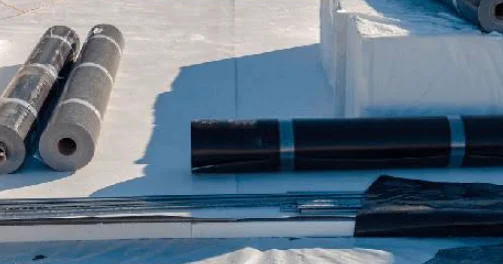
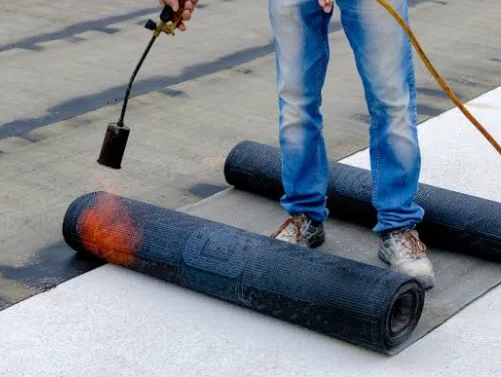
For decades, bituminous materials have proven to be an excellent adhesive for concrete surfaces. In form of self-adhesive membranes or hot-applied coatings, they are used for large flat surfaces like roofs, as well as for complex structures that need a seamless coating. However, bituminous materials can degenerate under UV-radiation, provided they are not covered with a reflective layer or an overburden.
Cementitious Waterproofing Compounds
Cementitious coatings are one of the simplest form of waterproof coating to apply to concrete structures, because they bond easily to concrete. They are typically used for internal wet areas such as bathrooms, waterproofing of water tanks and the waterproofing of basement walls and ceilings. Their main advantage is that they are 100% compatible with cement-based substrates, however they have very little flexibility compared to most of the other form of waterproofing membranes, particularly elastomeric membranes.
Liquid-Applied Membranes
Liquid-applied membranes form a complete, seamless membrane film after curing. They are particularly suitable for applications where detailing is complicated and irregular surfaces exist. The flexible liquid membrane is able to absorb minor structural movement without cracking. Most liquid-applied membranes are based on polyurethane or acrylic polymers.
How Do Waterproofing Materials Function at the Structural Level?
Building waterproofing systems use physical or chemical methods to prevent water from entering a building’s structure through concrete or masonry.
Barrier Mechanism
Traditional systems rely on forming an impermeable barrier over surfaces exposed to moisture. Bitumen sheets or PVC membranes physically separate the structure from external water sources. This approach is effective but requires precise installation to avoid seam failures.
Crystalline Growth Within Concrete
Crystalline waterproofing solutions use special chemicals that penetrate right into the tiniest capillaries within a wall. After having entered a capillary the chemicals react with the water that is already present in the said capillary to form a lot of tiny insoluble crystals. This very process seals up all micro-pores of a concrete forever, so that in the end it is the very concrete itself that will close up all holes and fissures and in doing so become waterproof for a long time. Even external damage of the surface will no longer pose a threat to the waterproofness because of the concrete’s newly won self-healing capabilities and the concrete’s high hydrostatic pressure-resistant quality.
Hydrophobic Surface Treatment
Hydrophobic coating modify the surface tension of a substrate so that water is repelled from the surface in the form of beads instead of being absorbed into the material. Typically the best types of liquid repellents are made with silicone and are used to treat facades and many types of stone claddings. These treatments leave the look of the substrate unaltered and do a great job of repelling moisture.
Where Are Waterproofing Materials Most Commonly Applied?
Different applications exist within different structural elements. These are determined by level of exposure and design intent.
Roofs and Terraces
Roofs are exposed to direct rainfall impact and UV radiation; thus, they require durable flexible membranes such as modified bitumen or polyurethane coatings. Multi-layered waterproofing assemblies with root barriers are commonly used for green roofs to prevent plant roots from penetrating through the roofing layers.
Basements and Foundations
Below-grade structures are constantly under hydrostatic pressure from groundwater. Protection against water intrusion into the walls, and relief of pressure building up behind the walls, can be achieved by application of a cementious coating in combination with a drainage composite.
Tunnels, Bridges, and Water Retaining Structures
Construction projects require durable waterproofing system to sustain vibration, temperature fluctuation, and chemical exposure. In view of their physical strength and reliable joint performance, waterproofing sheet made of PVC (Polyvinyl Chloride) or TPO (Thermoplastic Polyolefin) is widely adopted.
Why Is Proper Application Technique Critical?
Even the best waterproofing systems will fail if incorrectly applied. The precision with which a waterproofing system is installed directly affects the length of time it will last and the degree to which it will perform as intended.
Substrate Preparation
A clean dry substrate that has not been painted or surfaced with laitance will give the best adhesion between layers. Failure to prepare a surface correctly can cause the coating to blister or delaminate under hydrostatic pressure in a basement or retaining wall application.
Layer Thickness Control
By applying uniform film thickness an adequate surface protection is ensured. Thin films may crack under stress, while too thick films may contain to much solvent vapor which during curing can evolve into bubbles.
Detailing Around Joints and Penetrations
Weak spots typically occur around pipe entries or expansion joints where discontinuities exist. Flexible sealants or reinforcing fabrics must be integrated at these points to maintain watertight continuity throughout thermal cycles.
How Do Environmental Conditions Affect Material Performance?
Short-term curing as well as long-term durability of waterproofing systems are affected by the environmental conditions.
Temperature Variation
High temperatures can cure faster but can also cause liquid applied membranes to shrink and crack. Low temperatures slow down the curing of adhesives and coatings so that the bond may not be complete. Most manufacturers of adhesives and coatings give a temperature range for best application, which is usually between 10°C and 35°C.
UV Radiation Exposure
UV light in the sun can degrade organic compounds like bitumen unless they are protected with a reflective coating or a gravel ballast layer on exposed sections of the roof.
Chemical Contaminants
In industrial environments affected by acid rain or chemical vapors the resistance to corrosive agents is of major importance. Epoxy based coatings show superior chemical resistance in comparison to standard polymer emulsions.
What Are Emerging Trends in Waterproofing Technology?
Innovating continuously to make construction more sustainable, easier to use and longer lasting.
Self-Healing Systems
These new formulation release microcapsules with reactive filling which automatically will seal up very small cracks when it gets in contact with water. This makes an automatic and predictable maintenance, especially for underground applications where many structures are shifting or subject to settlement.
Green Building Compatibility
Eco-friendly formulations that contain low VOC’s enable the coating to become qualified for green certification under LEED standards. The coating will have minimal impact on the environment during the application process while maintaining performance that is equal to conventional coatings.
Smart Monitoring Integration
Latest updates include a number of sensors being embedded in the waterproof layer of a building which can pick up early moisture intrusion through wireless alerts and allow for the predictive maintenance of critical assets such as tunnel and data center assets before visible damage occurs.
FAQ
Q1: What is the most durable waterproofing material for roofs? A: Polyurethane liquid-applied membranes are very flexible and resist UV degradation; ideal long lasting roof waterproofing solution for all climates.
Q2: Can cementitious waterproofing be used externally outdoors? A: Yes but it must be covered with a suitable topcoat to prevent it drying out from weather. As it does not have any flexibility it will inevitably crack due to thermal expansion. It is not comparable to any of the Elastomeric waterproofing systems on the market.
Q3. How often should waterproofed surfaces be inspected? A. Annual inspections. Allows detection of early stages of wear such as blistering/peeling prior to developing into a leak & potentially causing serious structural problems & expensive repairs.
Q4: Are crystalline products suitable for old concrete structures? A: Yes. Penetration into existing cracks up to several millimeters deep is possible after reactivation by moisture. Hence, they are predestined for the rehabilitation of older concrete tanks and foundations.
Q5: What are some deciding factors between sheet membrane & liquid coating? A: Geometry of project. Areas that are relatively flat and are easily accessible with large sheets of membrane are typically best coated with a sheet of membrane. Irrregularly shaped surfaces with a lot of complex details are best served with a seamless liquid application that gives continuous coverage with no joints.