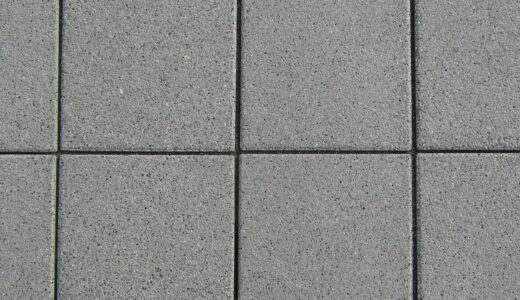
Concrete joint filler vs sealant for slabs and pavements

Concrete joint filler is a function, not a single product
A concrete joint filler should be selected by what the joint is expected to do. In an interior industrial slab, the priority is often support for joint edges under forklifts, pallet trucks, or other hard-wheeled traffic. In an expansion or isolation joint, the priority is movement space. In an exterior pavement joint, the main concern may be keeping water and incompressible debris out of the joint reservoir.
For that reason, the phrase concrete joint filler can refer to several different materials: semi-rigid epoxy or polyurea fillers, compressible expansion boards, hot-applied pavement materials, elastomeric sealants, or a joint system that includes backer rod and a sealant cap.

The useful question is not simply which concrete joint filler is strongest. The better question is what type of joint is being filled, how much movement it must tolerate, whether traffic loads cross it, and whether moisture, hygiene, freeze-thaw exposure, or floor coatings affect the detail. For related material selection topics, see the sealants section.
Why filler and sealant are not the same thing
Industry guidance uses these terms differently. The American Concrete Institute describes contraction, isolation, expansion, construction, and cold joints by their purpose in the concrete system. A contraction joint is intended to control where shrinkage cracking occurs. An isolation joint separates adjacent concrete or structural elements so they can move independently. An expansion joint allows movement from dimensional change and, in slabs on ground, is commonly filled with a compressible material. A construction joint is the planned interface between separate concrete placements.
Federal Highway Administration pavement guidance also separates joint filling from joint sealing. A sealant normally relies on adhesion to the joint sidewalls and on a designed reservoir shape. A filler may occupy a narrower saw cut and may be used mainly to limit the entry of incompressible materials. On industrial floors, however, filler often means a semi-rigid material that supports joint edges against hard-wheel impact and shear.
This functional difference explains many field problems. A soft sealant may be too flexible for a warehouse aisle, while a stiff floor filler can be unsuitable for a true expansion joint.
Match the material to the joint type
The following comparison is a practical starting point for specification review. It does not replace project documents, manufacturer instructions, or local code requirements, but it helps avoid a common mistake: selecting a material by name instead of by joint function.
| Joint or condition | Main purpose | Common material approach | Key caution |
|---|---|---|---|
| Interior saw-cut contraction or control joints with hard-wheeled traffic | Control cracking and protect joint edges | Semi-rigid epoxy or polyurea filler installed flush with the floor | Soft caulk can leave the joint edge unsupported under forklifts or pallet trucks |
| Interior construction joints in traffic areas | Separate placements and carry traffic across the joint | Semi-rigid filler, sometimes with dowels or other load-transfer details | Filler cannot correct poor load transfer or unstable slab edges by itself |
| Expansion or isolation joints at walls, columns, foundations, or fixed elements | Allow movement and separation | Compressible preformed filler, often with an elastomeric sealant cap where sealing is needed | Rigid epoxy or hard polyurea can restrain movement and damage the joint |
| Exterior pavement joints | Limit water and debris entry while allowing movement | Hot-applied sealant, silicone sealant, preformed compression seal, or filler detail as specified | Reservoir geometry, cleaning, backer rod, and recess depth strongly affect performance |
| Wet, hygienic, or dust-sensitive interior areas | Close the joint surface and reduce contamination | Elastomeric liquid sealant or preformed elastomeric system; edge armoring may be needed in traffic areas | A hygienic seal and heavy-traffic edge support may require separate design measures |
Main types of concrete joint filler and sealant materials
Semi-rigid epoxy and polyurea fillers
Semi-rigid fillers are widely used in industrial and commercial slabs where hard wheels cross saw-cut joints. ACI 302.1R-15 recommends semi-rigid filler for contraction and construction joints in floor areas exposed to the hard wheels of material-handling vehicles. The purpose is not to waterproof the joint in the same way a flexible sealant does. The purpose is to restore lateral support to the joint shoulders so the concrete edge is less likely to spall when wheels pass over the joint.
Epoxy fillers are generally stiff and durable. Polyurea fillers are often selected where faster cure and lower downtime are important. Both should be checked against the project requirements, service temperature, expected movement, and compatibility with any floor finish or coating system.
A common industrial floor detail is to fill the saw-cut joint and then shave or grind the cured filler flush with the floor surface. If the slab is still shrinking, separation at the joint face or within the filler may appear later. On fast-track projects, maintenance refilling should be anticipated rather than treated as an unexpected condition.
Compressible preformed expansion joint fillers
Preformed expansion joint filler boards are used where concrete elements need deliberate separation. ASTM D1751 covers nonextruding, resilient asphalt-type preformed expansion joint filler. ASTM D1752 covers preformed sponge rubber, cork, and recycled PVC expansion joint fillers for concrete paving and structural construction. These materials are not selected to provide a hard wheel-bearing surface. They are selected because they can compress and recover as the concrete moves.
In many slab details, the preformed filler extends through the slab depth to maintain separation. Where appearance, water resistance, hygiene, or dust control matters, the top portion may be recessed or removed and capped with an elastomeric sealant. That cap is a sealant detail over a movement filler; it is not a replacement for the expansion joint itself.
Elastomeric sealants
Elastomeric polyurethane, silicone, polysulfide, and similar sealants are used when the joint surface needs to remain sealed while still accommodating movement. ASTM C920 is a common reference for cold-applied elastomeric joint sealants in building construction applications such as buildings, plazas, and decks. It should also be noted that not every classified sealant is suitable for every substrate or exposure. The type, grade, class, and use designation matter.
Elastomeric sealants are often appropriate for isolation joints, perimeter joints, wet areas, and exterior building joints. They are not automatically appropriate for warehouse control joints with hard-wheeled traffic, because a highly flexible material may deflect under the wheel and leave the joint arris unprotected.
Hot-applied pavement sealants and preformed compression seals
Roadway and pavement joints are often treated as a sealant system, not as a simple filler pour. ASTM D6690 is commonly referenced for hot-applied joint and crack sealants for concrete and asphalt pavements. FHWA guidance describes formed-in-place seals, including hot-poured materials and silicone sealants, as well as preformed compression seals such as neoprene profiles. These systems depend on reservoir preparation, sealant geometry, and proper installation temperature or cure conditions.
Backer rod and bond breakers
Backer rod is not the visible joint filler, but it is often essential to a sealant detail. It helps control sealant depth, form the intended sealant profile, and prevent three-sided adhesion. FHWA pavement guidance describes backer rod diameter as commonly about 25 percent larger than the reservoir width so it fits snugly. The rod must also be compatible with the sealant, especially where hot-applied materials are used.
Installation details that determine performance
Clean, dry sidewalls matter
Most joint materials fail early when they are installed against dust, laitance, saw slurry, oil, moisture, or loose concrete. FHWA concrete pavement guidance emphasizes cleaning joints after saw cutting or widening and again before sealant installation. Airblasting, sandblasting, or waterblasting may be used depending on the specification. Where water is used, the joint needs enough time to dry if the selected sealant requires dry surfaces. For interior fillers, mechanical cleaning and removal of weak edges are just as important as product choice. See also: Membranes.
Depth and shape should follow the function
Industrial floor fillers are often placed to the full depth of the saw-cut joint. ICRI technical literature on joint filler function notes that, for lift-truck traffic areas, support should extend through the sawed portion of the joint, or at least to a practical minimum depth in deeper construction and isolation joints where traffic crosses.
Pavement sealants are different. They are usually designed with a reservoir and shape factor. For many recessed pavement sealant configurations, FHWA guidance describes the finished sealant surface as sitting slightly below the pavement surface, commonly in the range of about 3 to 6 mm, to reduce traffic damage.
Timing affects separation
Concrete slabs continue to shrink as they dry. ACI floor guidance advises deferring joint filling and sealing as long as possible to reduce the effect of shrinkage-related joint opening. ICRI guidance also notes the practical conflict: ideally, a floor joint filler would be installed after substantial drying shrinkage but before hard-wheeled traffic begins.
Project schedules rarely allow that perfect sequence. On fast-track floors, early filling may be necessary, but owners should expect inspection, shaving, refilling, or repair where joints widen later.
Flush or recessed finish is not a cosmetic choice
Interior semi-rigid fillers used for traffic support are normally finished flush so wheels do not strike an unsupported edge. Exterior pavement sealants are often recessed so traffic, snowplows, and thermal movement do not pull or shear the sealant out of the reservoir.
A flush finish in the wrong exterior condition can be vulnerable. A recessed finish in the wrong industrial floor condition can leave edges exposed. The finish level should follow the joint function, not only the desired appearance.
Common mistakes when choosing concrete joint filler
- Using soft sealant in a forklift aisle. Flexible caulk may seal the surface but still allow hard wheels to crush unsupported joint edges.
- Using rigid filler in a true expansion joint. A stiff filler can restrain movement that the joint was designed to accommodate.
- Ignoring the difference between a crack and a joint. A planned joint has a purpose and geometry; a random crack may need investigation before filling.
- Filling dirty or damp joints. Poor preparation can defeat an otherwise suitable product.
- Expecting filler to replace load transfer. Dowels, reinforcement strategy, slab thickness, base support, and joint stability affect performance beyond the filler itself.
- Covering active joints with rigid flooring systems. Coatings, toppings, tile, or resilient flooring should respect movement joints unless a designer provides a tested transition detail.
A concise specification checklist
Before selecting a material, a project specification should answer several basic questions. First, identify the joint type: contraction, construction, expansion, isolation, or repair crack. Second, define the service condition: pedestrian use, pneumatic tires, hard wheels, wet cleaning, chemical exposure, exterior weather, freeze-thaw cycles, or deicing salts. Third, state the required function: edge support, movement accommodation, water resistance, debris exclusion, hygiene, appearance, or a combination of these.
The specification should also define joint preparation, minimum or designed depth, whether backer rod or bond breaker is required, finish level, cure time before opening to traffic, compatibility with coatings or flooring, and maintenance expectations. Standards such as ACI 302.1R-15, ASTM C920, ASTM D1751, ASTM D1752, ASTM D6690, and FHWA pavement joint guidance are useful references, but they must be applied to the correct joint type. A standard named in a submittal does not prove that the material is appropriate for every concrete joint.
Frequently asked questions
Is concrete joint filler the same as concrete joint sealant?
No. The terms overlap in everyday language, but they are not identical. A filler often occupies a joint to support edges or block debris. A sealant is selected to seal the joint surface while accommodating movement through adhesion and elasticity. Some systems use both a filler or backer material below and a sealant at the top.
Which filler is right for control joints in a warehouse floor?
For saw-cut control or contraction joints exposed to forklifts, pallet jacks, or other hard-wheeled traffic, a semi-rigid epoxy or polyurea filler is commonly specified. The purpose is to support the joint edge. The exact product should match joint width, temperature, cure schedule, traffic level, and floor finish requirements.
Can expansion joints be filled with epoxy or polyurea?
Usually not if the joint is a true expansion or isolation joint. These joints need compressible material and movement capacity. A rigid or semi-rigid filler can restrain movement and cause cracking, edge failure, or debonding. A common approach is a compressible preformed filler with an elastomeric sealant cap where surface sealing is needed.
How deep should concrete joint filler be installed?
Depth depends on the joint type and material. Industrial semi-rigid fillers are often installed through the saw-cut depth to support the joint shoulders. Pavement and building sealants normally follow a designed width-to-depth geometry, often using backer rod to control depth and prevent three-sided adhesion. Manufacturer instructions and project specifications should govern the final detail.
When should joints be filled after concrete placement?
Later is often better for shrinkage-related movement, but construction schedules may require earlier filling. ACI floor guidance recommends deferring filling and sealing as long as practical. If joints are filled early, later separation or the need for a second pass should be treated as a maintenance expectation rather than an unusual defect.